
Lexington Resident Lookup Records
A Lexington resident lookup is a cross-check, not one master list. The county Property Search can associate a name with a parcel and a tax correspondence address. The Judicial Public Index can associate a party name with a case. Probate, library, and state channels each answer narrower questions. Start with the record most closely tied to the fact at issue, then compare names, dates, and places before treating a match as reliable.
| Record | What It Confirms | Where to Search | Access |
|---|---|---|---|
| Property card | Tax owner, parcel, situs and correspondence fields | County Property Search | Public portal after disclaimer |
| Court index | Parties, case number, filing and docket status | SC Public Index | Disclaimer required; clerk retains file |
| Probate records | Estate and marriage-index clues within stated ranges | Lexington Probate Court | Index and counter routes differ |
| Voter service | An individual’s own registration service | MySCVotes | Identity-gated, not name browsing |
| Vital records | Certified event records for eligible requesters | SC DPH Vital Records | Statutory eligibility applies |
Use the Property Search when a parcel, owner name, or situs is the starting point. Use a party or case number in the court index when the question concerns a filing. The voter service is deliberately limited to the person using it, so it is not a route for browsing another person. A property owner or tax mailing address can be a useful lead, but neither proves who occupies a location.
Checking Lexington Court Names
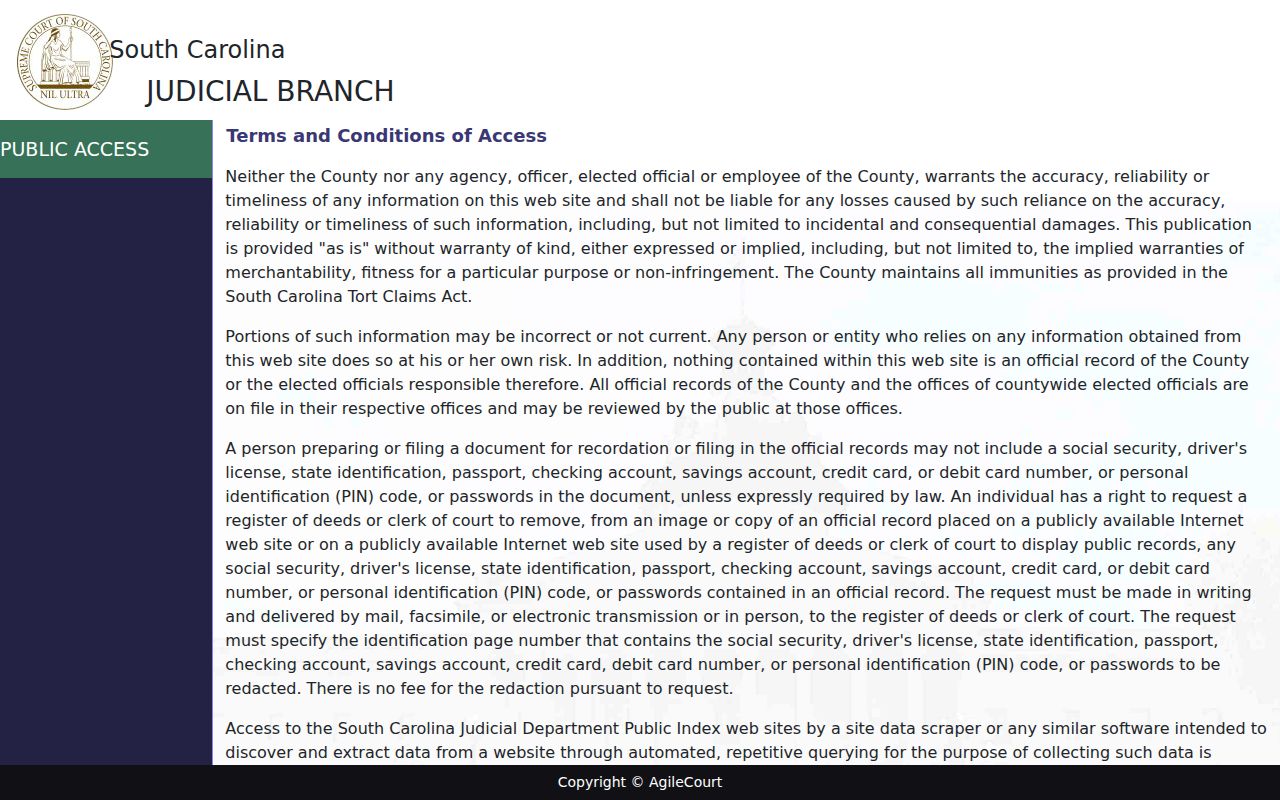
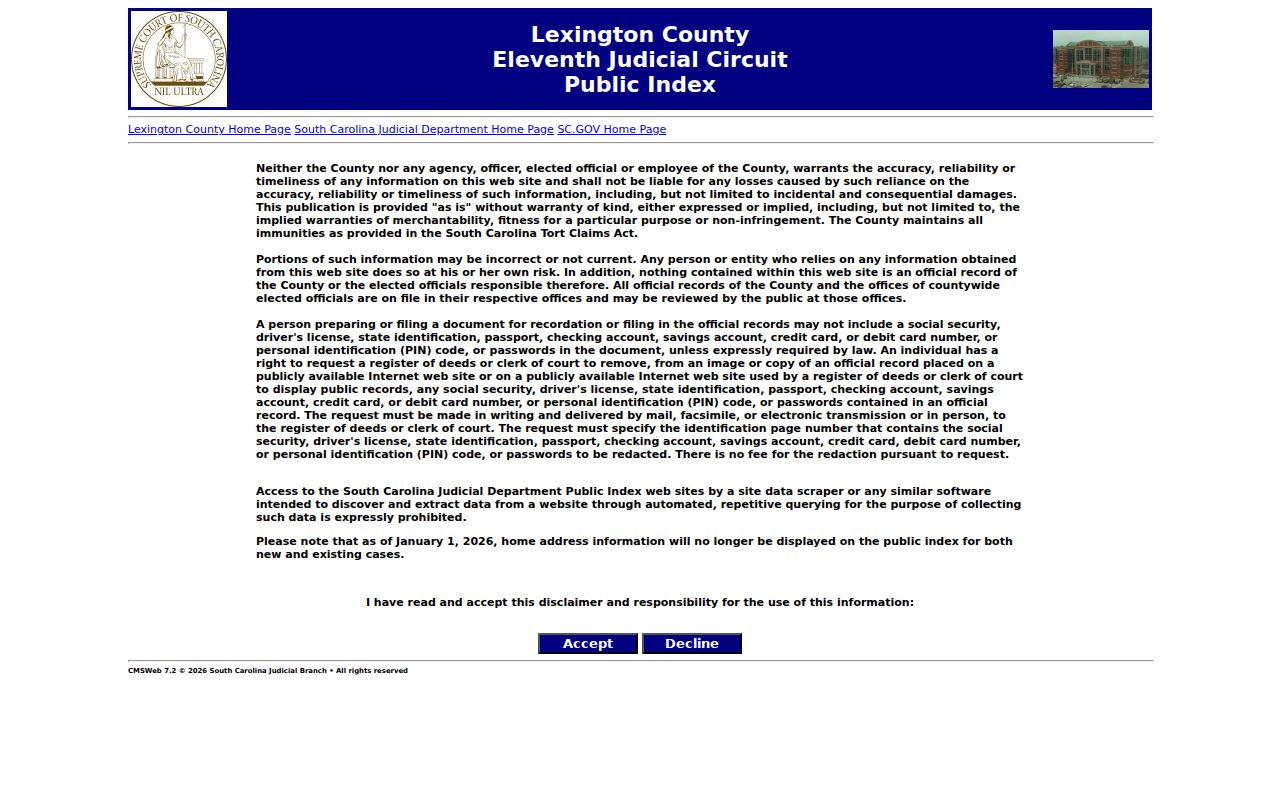
The Lexington County Public Index is a manual, statewide court search route. After accepting its disclaimer, use a case number where one is known. Otherwise start with a last name, first name, and county filter, then add court type, date, case type, or party role only when needed. The Judicial Branch guide cautions that too many filters can hide a result. The portal also prohibits automated repetitive queries.
A result commonly identifies the case number, court and county, party roles, filing date, case type, and available status or docket information. It is an index to the case, not automatically the underlying file. To obtain a record, contact the correct court or clerk with the case number, caption, and the ordinary or certified copy needed. Ask whether a file is at the counter, archived, sealed, expunged, juvenile, adoption-related, or otherwise restricted.
A Judicial Public Index portal screen makes the disclaimer step clear. The acceptance screen is part of the access rule, not a sign that every court record will be visible.
For a material question, confirm the result with the Lexington clerk or the relevant court file.
Lexington Court Result Fields
The county endpoint permits a Lexington filter and supports party, case-number, case-type, party-type, action, date, tax-map, and index or cross-index criteria. A case-number search is the most precise option. A name search should preserve spelling variants rather than collapsing people with similar names into one result. A docket entry records an event in a case. It does not itself settle every fact about a person.
| Party name | Compare spelling, suffix, and role with another record. |
|---|---|
| Case number | Use this identifier when contacting the clerk for the actual file. |
| Filing and status | Shows index timing or case posture, subject to the court’s public display. |
| Tax map number | A property-linked civil-case filter, not proof that a person lives at a parcel. |
View the Lexington search interface as a visual reference for the local court path. Search results should be read as docket information and followed to the custodian when a document matters.
The clerk, not the search screen, can explain copy availability and any file restriction.
Verifying a Lexington Resident
Verification means testing a lead against a second, independent record. A current owner name can lead from the property card to a parcel identifier and recorded deed. A court or probate result may then supply a case number, role, or date that either fits or does not fit that same person. Do not treat a matching surname, a tax mailing field, or a property address as enough on its own.
Verify Lexington Resident Records
Use a name, a parcel, and a dated event as separate checks. The process below keeps the County Assessor, ROD, court, and vital-record channels in their own roles. It also prevents a property record from being misread as a household list.
- Search the county property card by owner, situs, or tax map number. Save the property address, tax map number, legal description, and the distinct tax correspondence field.
- Use the tax map number and owner form to locate the acquisition deed through the ROD Online Services account route or at the counter. Compare the legal description, not a name alone.
- Search the court index by the confirmed name form or case number and then ask the appropriate clerk about the actual public file.
- For an event record, use the qualified DPH or Probate channel. Request a certified copy only when eligible and when that exact custodian requires one.
- Docket
- A court’s running list of filings, events, and case actions.
- Index and image
- An index points to a record; an image is a scan of the document and can have separate access rules.
- Certified copy
- A copy issued and authenticated by the custodian for uses that require official certification.
Lexington Vital Record Boundaries
South Carolina vital records are not an open name-search directory. The DPH birth-record route has statutory eligibility rules. South Carolina birth records become publicly viewable after 100 years under S.C. Code Ann. § 44-63-80, and death records after 50 years under § 44-63-84. Those historic-access dates do not mean everyone may order a modern certified copy.
Marriage research has a Lexington-specific split. DPH covers certified marriage records from July 1950 through December 2023. For Lexington-issued licenses before or after that span, contact Lexington Probate Court. Probate says its certified marriage copies cost $5.25, with walk-in and mail procedures on its page. DPH channels and eligibility remain separate from the Probate route.
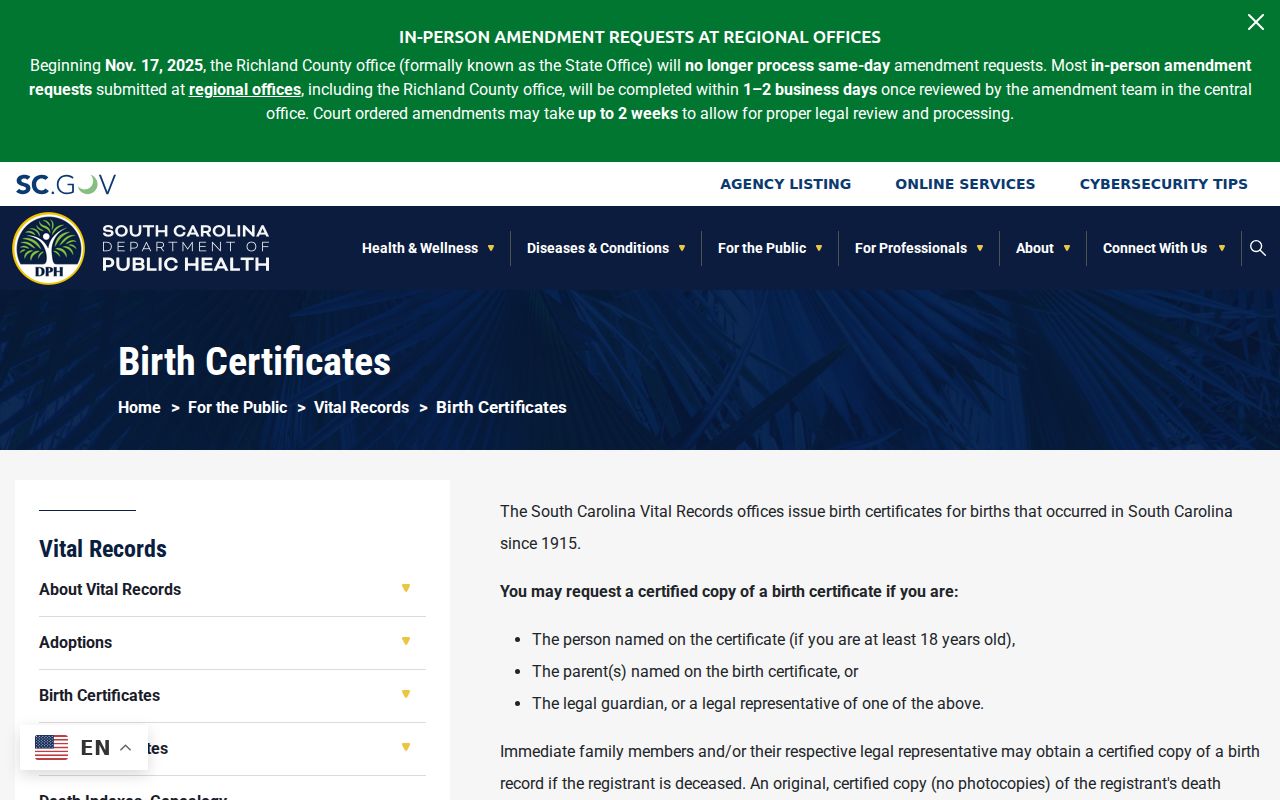
DPH’s birth-certificate instructions show the state channel, identification requirement, and application process.
For early family research, library newspapers, probate, cemetery material, and census records can provide lawful context without bypassing vital-record limits.
Lexington Voter Service Limits
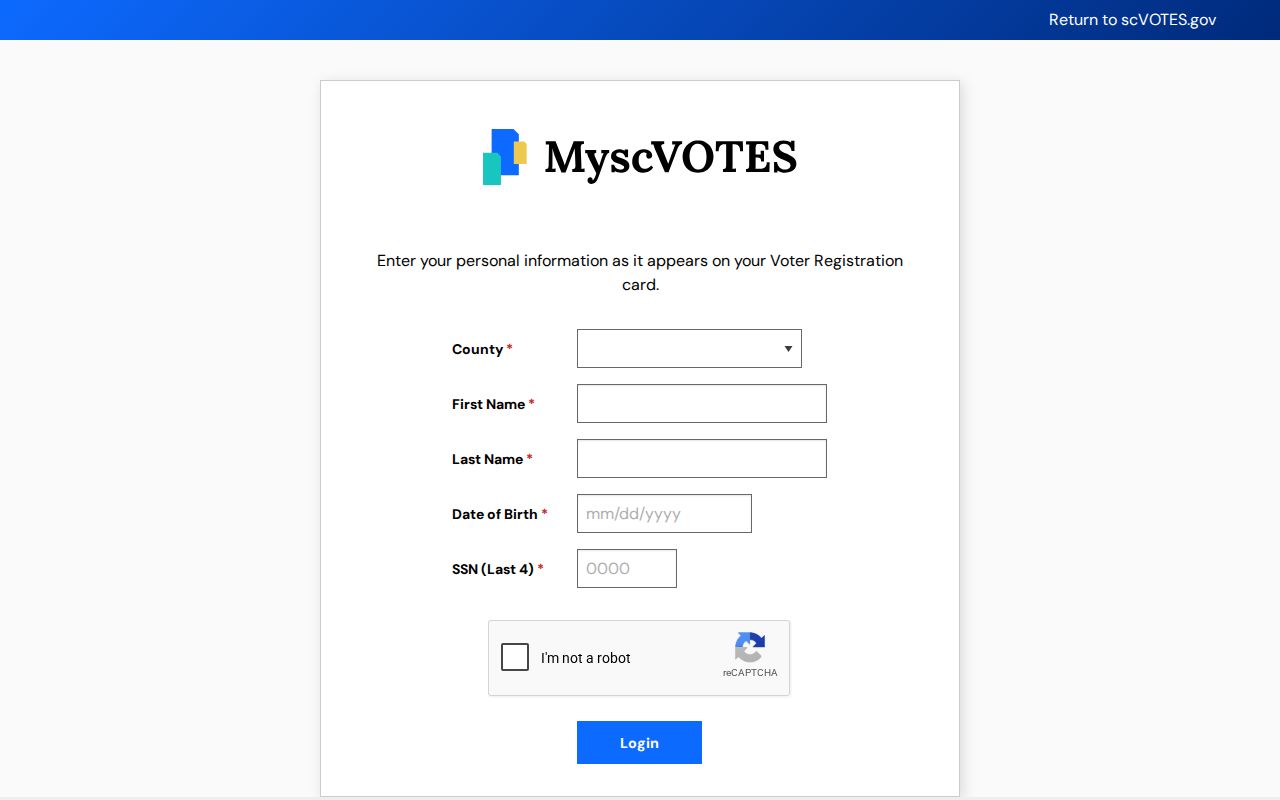
MySCVotes is an individual service, not a public resident lookup by name or block. Its login asks for county, first name, last name, date of birth, and the last four digits of the user’s Social Security number. Never guess or seek another person’s identifying information. Lexington County Registration and Elections can answer local registration questions at the official county office.
An eligible registered South Carolina voter may use the separate state list-purchase process under its published rules. That channel is constrained by statutory conditions and S.C. Code § 30-2-50’s restriction on commercial solicitation. It is not a replacement for verifying one person through original custodians.
The MySCVotes login displays the identity-gated fields used for personal service.
The screen’s privacy controls are a reminder that a voter record is not a public people-finder.
Lexington Probate Name Trails
Probate is a distinct Lexington County route when an estate or marriage question is part of a resident lookup. The Probate Court identifies public estate searches for 1865–1994 and 1995 to the present, marriage searches for 1911–1987, and marriage-license searches from 1986 forward. These are time-bounded research tools. They can supply an estate matter, decedent, representative, heir clue, or license lead, but they do not establish a current address or make a restricted vital record available.
For an estate-connected parcel, preserve the estate file number, legal name, tax map number, physical address, exact legal description, and the deed’s derivation before contacting a custodian. Lexington County’s deed-of-distribution instructions tie those details together when an estate transfer reaches the ROD. The packet is an estate and property bridge, not legal advice or a substitute for the Probate Court’s actual file. A material claim still requires the proper record and, where needed, a certified copy from its custodian.
Lexington Obituary Name Checks
For an earlier family question, the Lexington County Library obituary index is a useful confirmation lead. It accepts a required last name, an optional first or nickname field, and an optional death year. A result can direct a researcher to a newspaper title and date, which can help separate two people with similar names or connect a probate trail to a known event. It is not a complete death index or proof of a person’s full residence history.
Keep the newspaper title, date, name form, and any stated locality beside the property, probate, court, or census evidence already collected. The library reports a specific gap in its Lexington Dispatch-News obituary coverage, from February 24, 1944 through October 4, 1962. A missing hit inside that gap says nothing about whether a notice existed. This careful record-by-record method avoids filling a same-name gap with an unsupported match.
Correcting Lexington Record Errors
Send a correction or redaction request to the office that created the record. The Assessor handles tax data. The ROD controls recorded-document procedures and can receive a written redaction request for specified sensitive identifiers on online official-record images under S.C. Code § 30-2-330(C). The court clerk manages a docket or file issue. Elections handles voter registration questions. A general search result cannot correct an underlying official record.
For a county record not otherwise published, the South Carolina Freedom of Information Act provides a request route for existing records, not a way to compel a new list or defeat an exemption. Section 30-4-30 gives the determination and production framework, while § 30-4-40 protects classes such as medical, adoption, and library-patron records. A precise request identifies the record, date range, and custodian.
Limits on Lexington Resident Lookups
Some absences are intentional. South Carolina FOIA exemptions protect sensitive record classes, and the Attorney General’s Address Confidentiality Program gives qualifying victims a substitute mailing address under S.C. Code § 16-25-130. The program is not a general opt-out, and a missing field is never an invitation to reconstruct a protected address. Renters, other household members, utility customers, and protected residents are not established by a tax-owner record.
Lawful use. Use Lexington records for personal, family-history, estate, civic, or scam-verification research. Do not use a record to stalk, harass, intimidate, or harm anyone.