
Finding Lexington County Residents
Lexington County does not keep one public roll that names every person at every address. The better route begins with the fact already known. A street address can lead to the county parcel record. A person’s name can be checked against a public court index, a recorded land document, or an official license or business filing when that connection matters. For an older household, the library’s local-history materials and released census schedules can add dates and context. Each search returns a different kind of record, so matching a name alone is rarely enough.
Property records identify a tax owner, a tax correspondence address, and a physical parcel. They do not identify all household members or prove that an owner lives at the property. Court and probate records may identify a party or estate role, subject to sealing and record-class limits. The individual voter service is for a person to check their own registration, not a public browse tool. That distinction is the foundation of a useful Lexington residents directory search.
- Search the county property system by owner, property location, or tax-map number when an address or owner name is known.
- Compare the parcel’s physical address, legal description, and tax-map number before treating two results as the same property.
- Use a recorded deed, public court index, probate file, or official registry only for the specific question it can answer.
- For a past household, take the spelling and address to the South Carolina Room, newspapers, and released census material.
- Ask the custodian for an existing record when no published channel fits, using a focused request rather than asking for a new resident list.
Note: Keep the source date with every result because a Lexington County record can change after it is viewed.
Lexington County Records Offices
Three county offices form the main property trail. The Assessor maintains ownership and tax-mapping records. Planning and GIS helps place the parcel on the map. The Register of Deeds, often called the ROD, records deeds, plats, mortgages, liens, and related land instruments. These roles are separate from the Clerk of Court, which handles court files rather than deeds or plats. Lexington County Registration and Elections handles voter service questions, but its individual login is deliberately not a public directory.
Lexington County Register of Deeds
212 South Lake Drive, Suite 301
Lexington, SC 29072
(803) 785-8168
Lexington County Assessor
212 South Lake Drive, Suite 201
Lexington, SC 29072
(803) 785-8190
Lexington County Registration and Elections
605 West Main Street, Suite C
Lexington, SC 29072
(803) 785-8361
The first-floor tax offices, second-floor Assessor, and third-floor ROD, Planning and GIS, and Tax Mapping are all in the Administration Building. That layout makes the tax-map number a practical handoff between Lexington County counters.
Lexington County Property Search Fields
The county Property Search begins with an accuracy and timeliness disclaimer. Accept it, then search by a property owner, property location, Tax Map Number, or the paired Deed Book and Deed Page fields. The system can also sort by owner name, TMS, or tax year, and its results can be downloaded as CSV. The database is useful for locating a parcel, but the county warns that the information may be inaccurate, incomplete, or untimely. Treat it as a dated county assessment record.
| Lexington County field | Use | Important limit |
|---|---|---|
| Property Owner | Search last name, first name or a business name. | A tax owner is not necessarily a current resident. |
| Property Location | Find a physical or situs address. | Compare it with the map before choosing a parcel. |
| Tax Map | Locate the county parcel identifier. | Use it with the legal description for deed research. |
| Deed Book and Deed Page | Use the pair as a search path. | Both fields are needed when no owner, location, or TMS term is supplied. |
| Tax Year | View an assessment year. | The portal validates a four-digit year. |
The Lexington County Property Search screen is shown below. Start with its literal field labels, then retain the TMS and deed reference that appear on the selected property card.
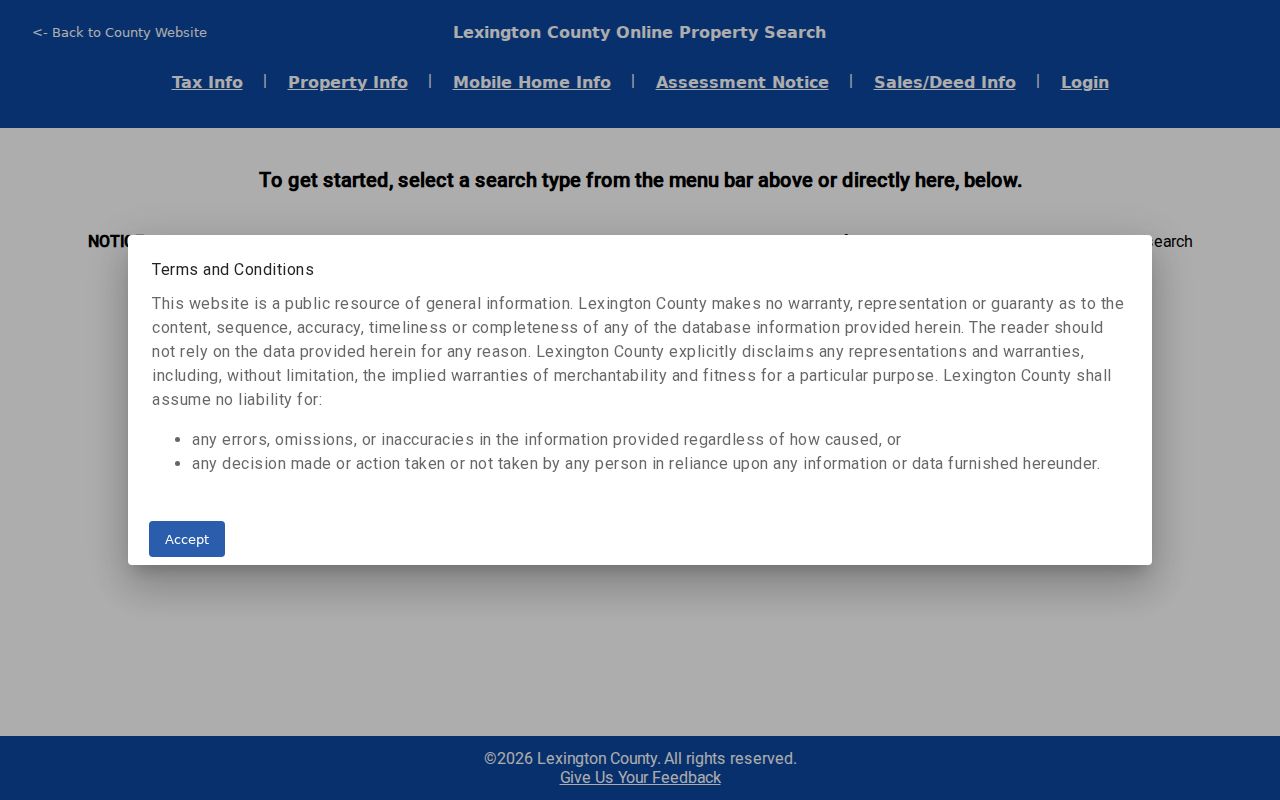
The search screen supports a parcel trail. It does not create a list of everyone who lives at a Lexington County address.
Lexington County Deed Records Trail
For a property question, a parcel connects the Lexington residents directory to recorded documents. Start with the current property card and write down the tax-map number, subdivision or lot language, legal description, and current owner form. Search the ROD for the owner’s acquisition deed, then compare the legal description before moving backward. In a deed, the grantor transfers the interest and the grantee receives it. The prior grantor can become the next name to search as a grantee, but only when the same land description supports the connection.
- Parcel or TMS
- The county tax-map identifier used to connect an assessed property to map and deed research.
- Situs address
- The physical location of a parcel. It can differ from the tax mailing address.
- Legal description
- The lot, subdivision, metes-and-bounds, or other land language that identifies the parcel in recorded documents.
- Index
- A finding tool that points to a record. It is not automatically the same as an image or certified copy.
The ROD department page states that data runs from August 1, 1984 to current and images from January 1, 1997 to current. Its online service now requires an account. The image below shows the stated coverage and county access information.
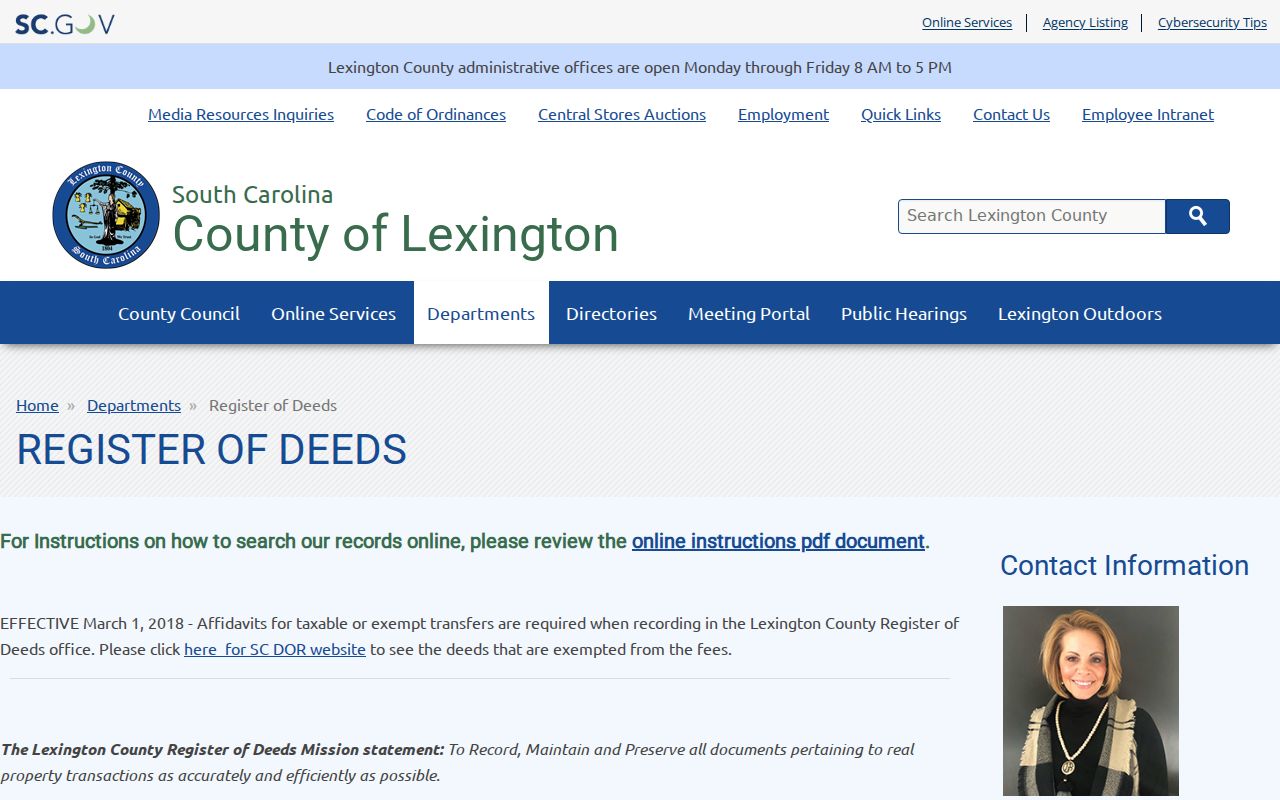
Those dates describe the county’s online coverage statement, not a promise that every earlier record or image is available through the same screen.
The current ROD Online Services login has username, password, new-account, and password-help controls. A county PDF describing a guest path is legacy guidance, not today’s access rule.
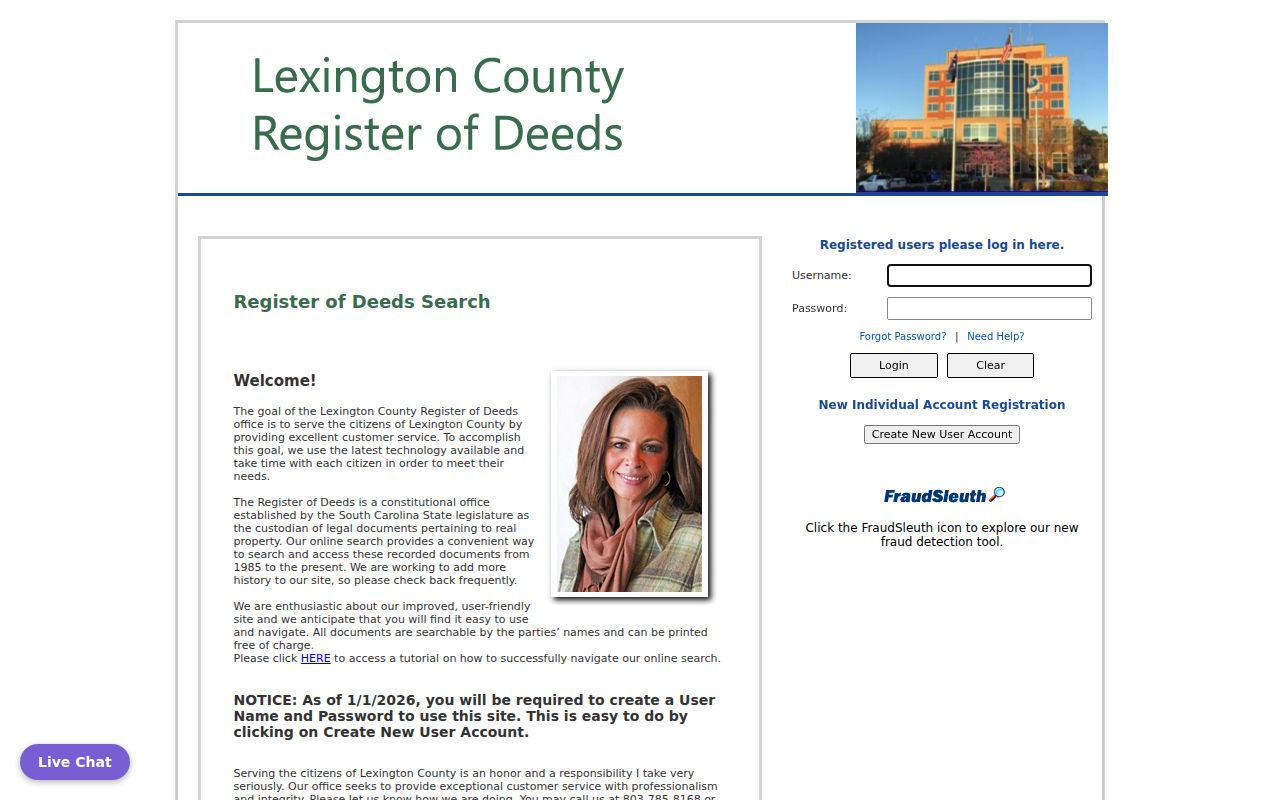
When the account-gated route or online coverage ends, take the book and page, TMS, and legal description to the ROD counter rather than assuming a modern street number will find an older deed.
Current Lexington County Resident Directories
Current Lexington County directory sources are specialized rather than interchangeable. The assessor gives a property and tax-owner view. The ROD identifies people who signed or received recorded instruments. Court and probate records can show a public case or estate role. The voter system has both a personal service channel and a separate qualified-purchaser list process. Business and professional records can confirm an affiliation, but a registered office or license contact is not proof of a home address.
| Lexington County source | What it can establish | Access boundary |
|---|---|---|
| Property assessment | Tax owner, tax correspondence address, situs, and parcel connection. | Ownership and mailing data are not a household roster. |
| ROD land index | Grantor, grantee, document type, recording date, and land reference. | It documents an instrument party, not current occupancy. |
| Judicial Public Index | Public case parties, case number, court, and docket status. | Sealed, juvenile, and other protected files remain limited. |
| MySCVotes service | A person’s own registration-service session. | County, name, date of birth, and last four of SSN are required. |
| Probate records | Estate roles and marriage index leads where public. | File access depends on record class and court rules. |
When the goal is a single person instead of a property or historical household, use the more detailed verification sequence in the Lexington resident lookup. A result should be checked against dates, location, and its original custodian.
Lexington County Court Name Checks
The South Carolina Judicial Department Public Index is a manual public name and case tool for participating trial courts. Narrow a search by Lexington County when appropriate and use one or two filters first. Its official guide supports case number, party name, court type, case type, party type, action type, date range, tax-map number range, and civil index filters. Too many filters can miss a result. The portal requires accepting its disclaimer and prohibits automated repetitive queries.
The Lexington County Public Index endpoint is a route to an index and docket, not a substitute for the original court file. A public result can show a case number, county or court, parties and roles, filing date, case type, and status or disposition information. Provide the case number and requested document to the correct clerk when an actual file or copy is needed.
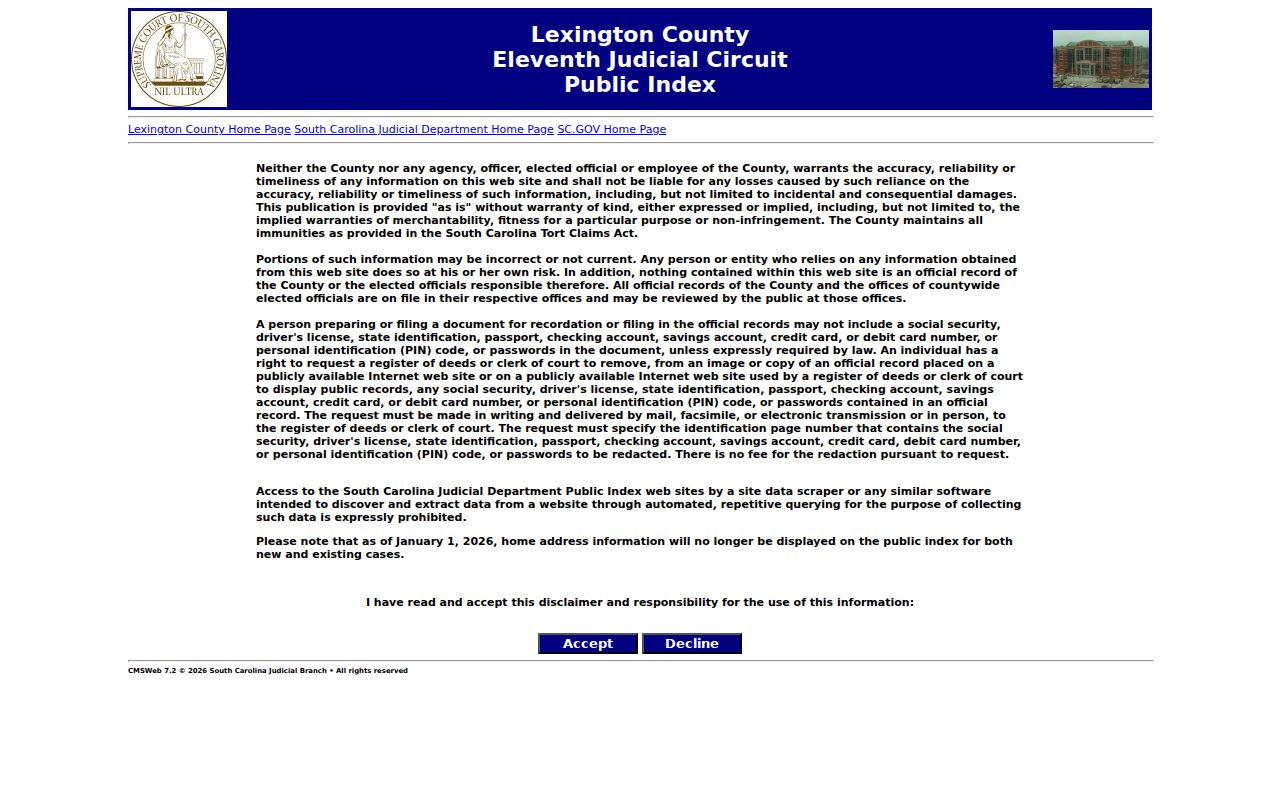
The local search interface should be used for a precise court question, not as proof that all records involving a Lexington County name are public or complete.
The statewide Case Management System public portal also begins with an acceptance screen. The screen below is a reminder that a user must accept the stated terms before manual searching.
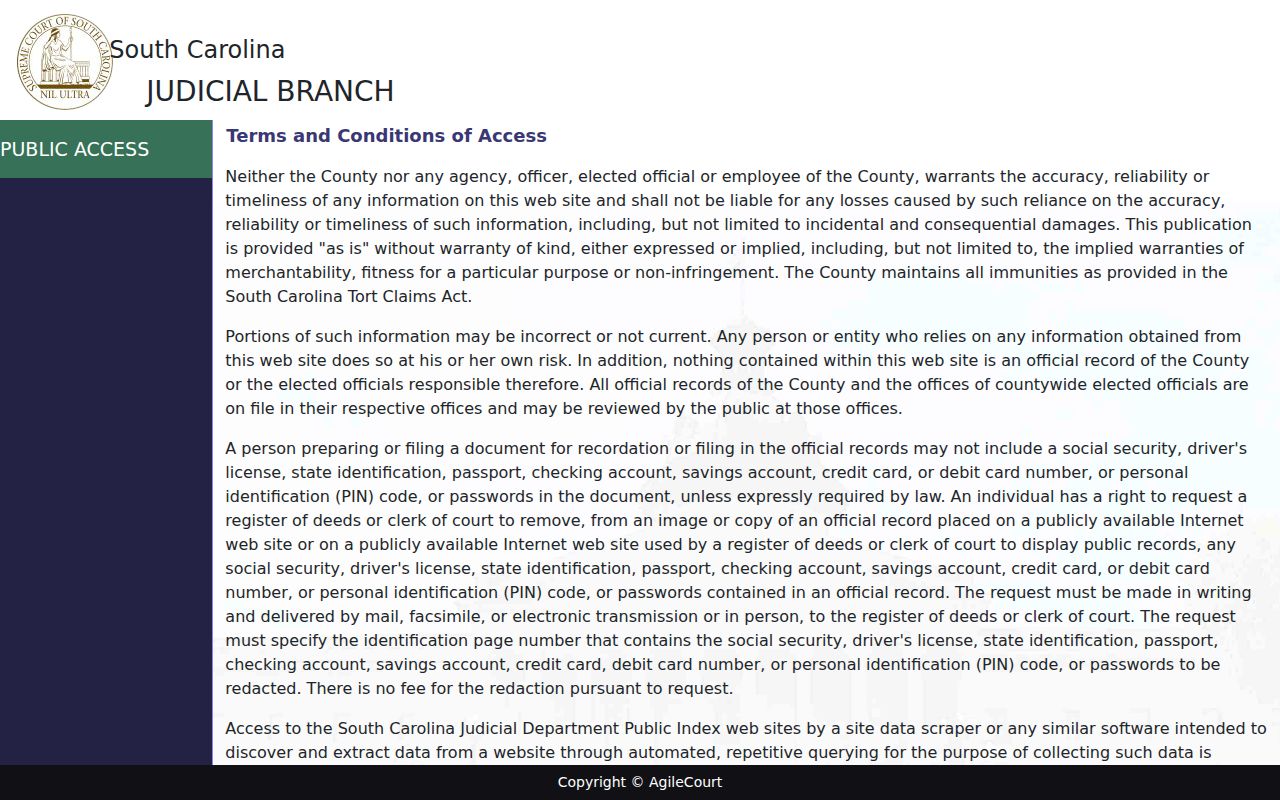
For Lexington County Circuit, Family, General Sessions, and related local files, confirm the division and then ask the clerk whether the file is public, archived, sealed, or subject to a copy procedure.
Lexington County Voter Check Limits
MySCVotes is a self-service check, not a public Lexington residents directory. The live form requires the county, first name, last name, date of birth in MM/DD/YYYY format, and the last four digits of the voter’s Social Security number. It supports a voter’s registration, polling-place, ballot, and history services. It should never be used by guessing another person’s identity details.
The official MySCVotes login below shows the identity-gated fields. South Carolina also has an official voter-list process for an eligible registered South Carolina voter, with statutory use restrictions and a current price schedule. That separate channel is not a public browse-by-street tool.
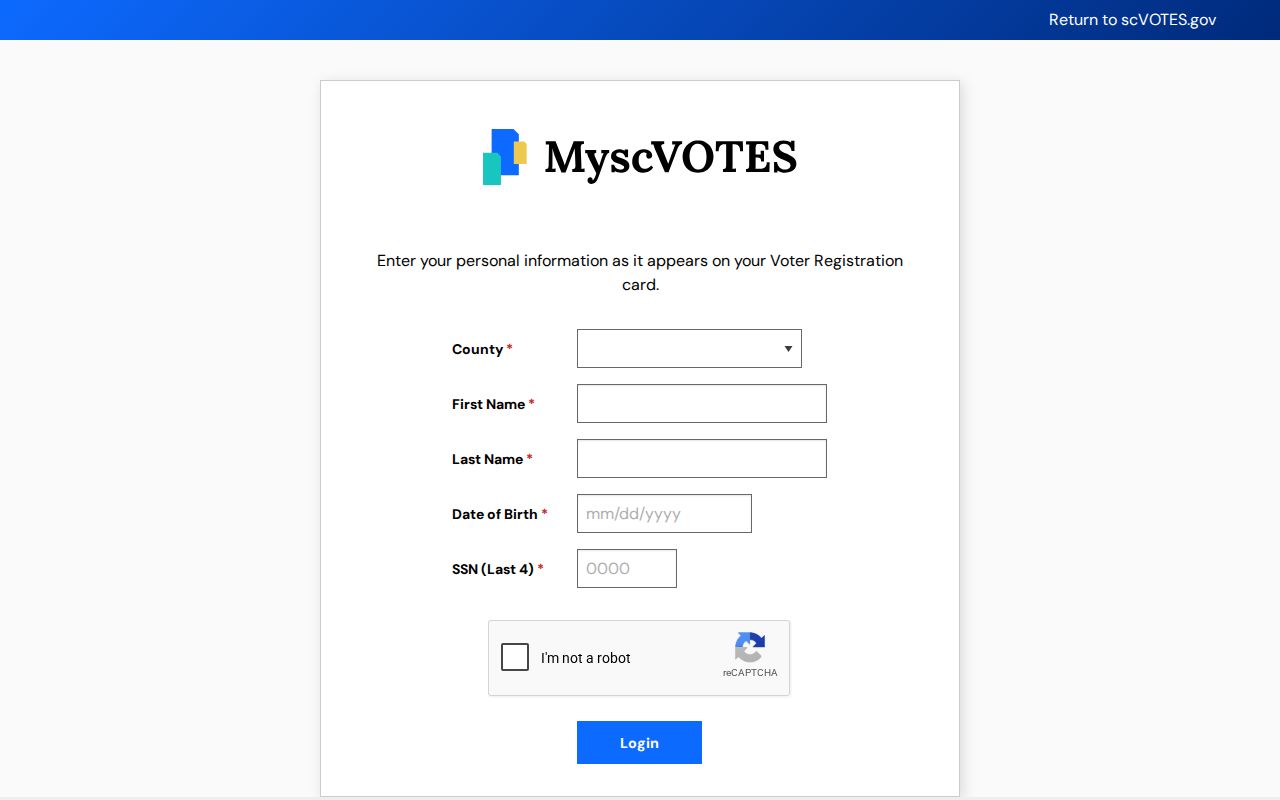
Lexington County Registration and Elections can answer local precinct or district update questions, while confidential and inactive-status limits still apply.
Note: Public voter access has legal boundaries, so never infer a protected record from a missing or limited result.
Lexington County Vital Record Routes
Vital records are not a general resident-search tool. The South Carolina Department of Public Health issues statewide certified records under eligibility rules. Birth certificates are restricted by S.C. Code § 44-63-80 and become public for viewing after 100 years. Death records are initially restricted and become public after 50 years under § 44-63-84. A historical viewing rule does not automatically make a current certified copy available to every requester.
Marriage records have a useful Lexington County split. DPH supplies certified marriage records from July 1950 through December 2023. For a Lexington-issued license before July 1950 or after December 2023, contact Lexington Probate Court, the local marriage-license custodian. Probate reports its own certified-copy procedure and fee. Use the date and issuing county, not a person’s current address, to choose the route.
The DPH birth-certificate channel is shown below. Its application, identification, fee, and processing instructions should be checked on the live DPH page before a request is sent.
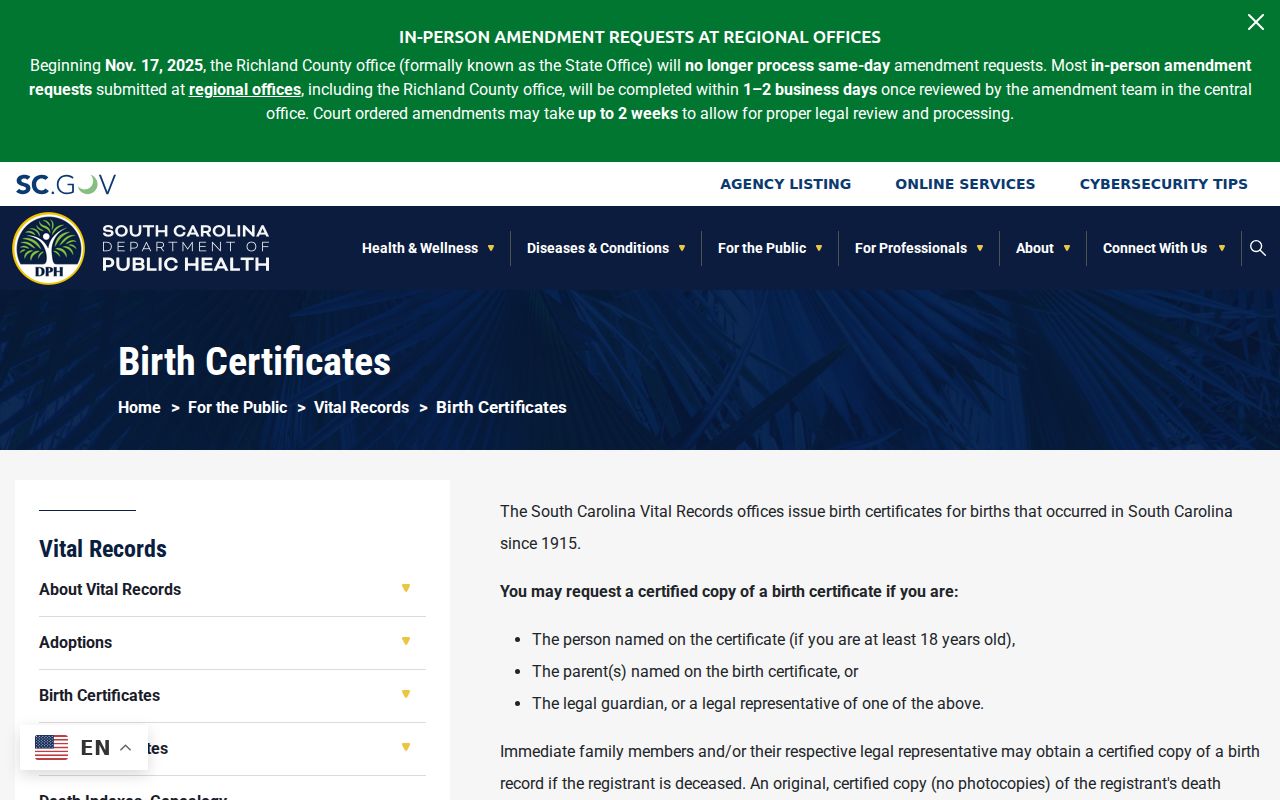
For a historic family-history question, the library, probate, church, newspaper, cemetery, and archival routes can bridge restricted vital-record years without bypassing DPH eligibility rules.
Lexington County Library History Sources
Earlier Lexington County residents are often easier to trace through the South Carolina Room than through a current directory. The room is on the ground floor of Lexington Main Library and focuses on Lexington County, the former Orangeburgh District area, and South Carolina. Its holdings include local obituary indexes, microfilmed newspapers, census, maps, historical papers, family histories, military material, and photographs. The library also lists in-library Ancestry Library Edition and other genealogy resources. Availability for a particular database or item should be confirmed with staff.
The South Carolina Room local-history page is the starting point for a catalog or counter request. Ask for the exact city-directory, telephone book, yearbook, obituary-index, newspaper, or vertical-file title and year. A catalog entry and a title page are much stronger evidence than a broad claim that a directory must exist for a certain period.
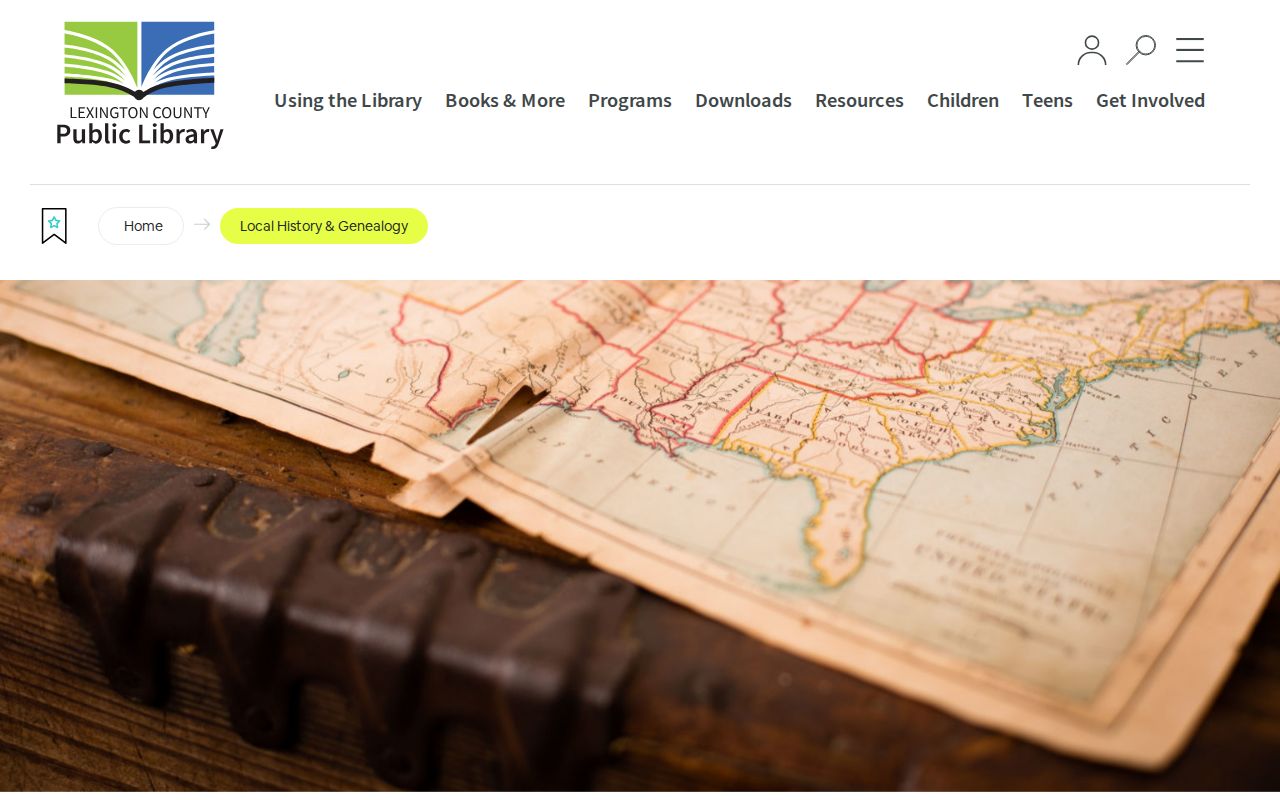
The South Carolina Room is a research channel, not a current household list. It can help link a Lexington County name, address, cemetery, notice, or community history item to a dateable record trail.
Historical Lexington County Directories
No verified web source publishes a complete Lexington County city-directory run. The careful route is to ask the South Carolina Room for the exact volume, publisher, and year, then preserve the title page, page number, name form, address, and any printed abbreviation key. A reverse or criss-cross directory, if the library catalogs one for the period, can be useful for an address question. It should not be assumed from a standard alphabetical directory.
Local newspapers can bridge a gap between directory years. The library identifies The Batesburg Advocate for 1901 through 1911, The Lexington Dispatch for 1873 through 1916, Lexington Dispatch-News for 1917 through 1919, and The Dispatch-News for 1919 through 1922. Notices can support a date, move, estate event, school connection, or spelling variation. Pair them with property, probate, census, or original records before treating them as conclusive.
The Lexington city directories collections route is reserved for the full historical-shelf method, including how to read a selected volume and pair it with census years.
Lexington County FOIA Boundaries
South Carolina FOIA, S.C. Code §§ 30-4-10 through 30-4-110, is a fallback for an existing Lexington County or municipal record that is not already published. Under § 30-4-30, a written request receives a determination within ten business days, or twenty business days for records more than 24 months old. Once granted, production or inspection follows the statute’s 30- or 35-day framework. The custodian may charge permitted actual search, retrieval, and redaction costs, and may require a deposit within the statutory limit.
Send a focused request to the office holding the record. Give a name, address, date range, document or case number, and the preferred electronic format when known. FOIA does not require an agency to create a resident list, override a statute that makes a record confidential, or reveal protected medical, adoption, library-use, or similar records. The county Public Information Officer has the Lexington County FOIA request channel for county-held records.
| Official record route | General commercial people-finder category |
|---|---|
| Names the original custodian and record type. | May combine data from different sources and time periods. |
| Lets a researcher verify the record at its office. | Can contain stale entries or mixed identities. |
| Uses the custodian’s correction or redaction process. | Requires its own provider-specific correction or deletion channel. |
Lexington County Town Records Requests
An address inside the Town of Lexington may have a municipal route that differs from the county route. The Town’s public-records system handles its own agendas, ordinances, financial material, and address-keyed records. It directs birth and death questions to DPH, marriage questions to the county, and real-estate tax questions to the county. That division prevents a Town request from being used as a substitute for the Assessor, Probate, or DPH custodian.
The Town adopted NextRequest on June 10, 2025 for FOIA submission. A focused request can identify the street address, permit or property number when known, date range, and request for existing electronic files. Its form includes routing for building code, zoning code, finance, utilities, transportation, and other existing records. Town camera video has a short stated retention period, so a time-sensitive request should be made promptly.
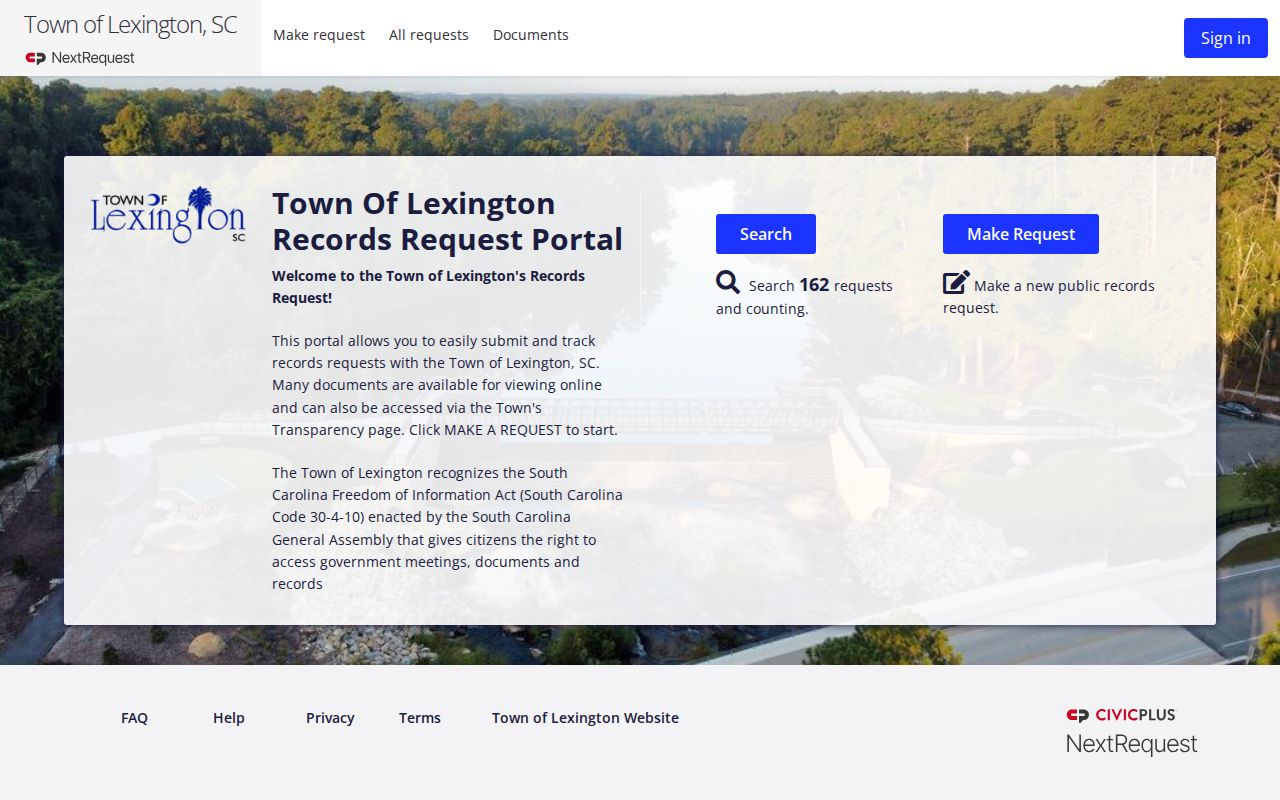
For Cayce, West Columbia, Irmo, Chapin, and other communities, identify the physical jurisdiction before asking for municipal permits, zoning, code, court, or police records.
Lexington County Counter Handoff
One practical Lexington County tip is to carry the parcel’s TMS between county offices. The Assessor can help identify the assessment and map reference. Planning and GIS can help resolve mapped context or addressing questions. The ROD can then use the legal description, book and page, or instrument reference to locate a recorded document. This counter sequence is especially helpful when the online ROD account requirement or a dated portal record leaves a gap.
The handoff works because each office has a distinct record role. It does not make a tax map number a universal person identifier. Keep the property question tied to the parcel, and take a separate name or court question to its proper Lexington County custodian.
Note: A legal description and tax-map number usually survive address formatting changes better than a modern street-number search.
Lexington County Assessment Dates
Lexington County completed a countywide reassessment in 2025 and lists 2030 as the next mandated reassessment. Assessment values, property characteristics, and owner or mailing details are administrative snapshots, not permanent history. Add a viewed-on date to any property result used in a Lexington residents directory trail. A deed recording date marks a document event, while an assessor record reflects a tax and mapping system at a point in time.
The distinction matters when comparing a recent property card with an older deed, tax bill, map, or family record. Confirm a material fact with the office that holds the original record before relying on it.